Integrated CCMR Systems That Strengthen Student Readiness
Erica Cedillo | CCMR Unit Coordinator I | Houston ISD
Why This Work Matters
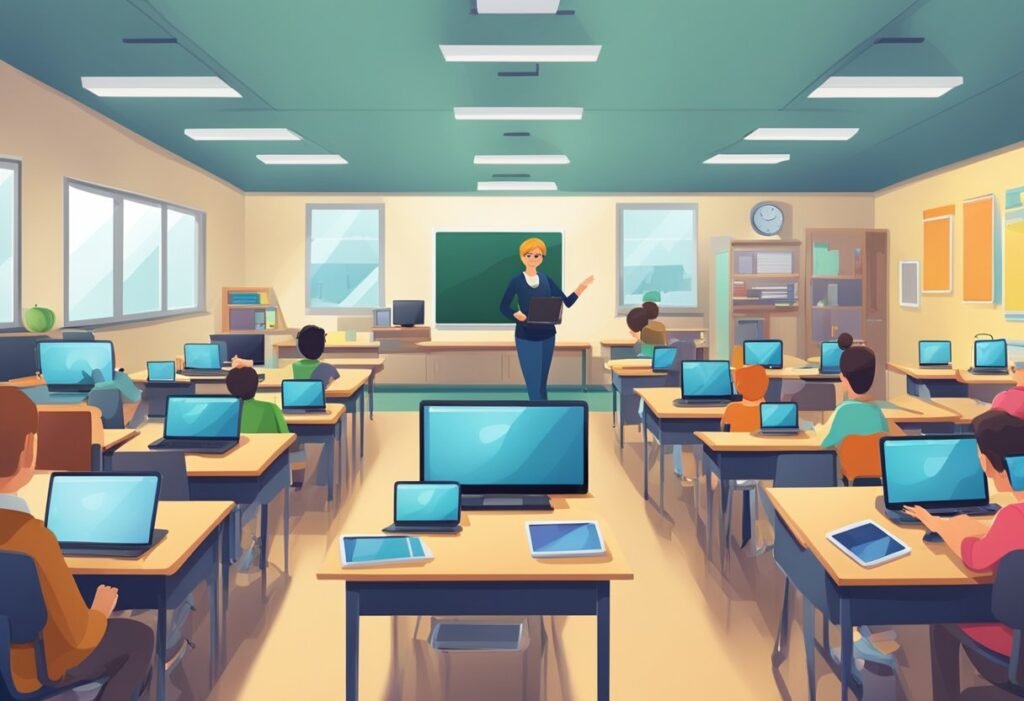
In my work supporting College, Career, and Military Readiness (CCMR), I have seen something consistent across campuses which is we often have strong digital tools, but they do not always work together.
We have career exploration platforms.
We have mentoring initiatives.
We have readiness dashboards and data reports.
Yet students sometimes experience CCMR as a series of tasks to complete rather than a journey to understand who they are and where they are going. This portfolio reflects my belief that technology does not improve readiness on its own. What matters is how we design systems that connect digital tools, mentoring relationships, and leadership practices into one coherent experience for students.
My Core Belief
Technology strengthens CCMR outcomes only when it is intentionally integrated into a relationship-centered system.
When systems are fragmented:
- Students complete surveys but never reflect on them.
- Dashboards track readiness but do not drive conversations.
- Career exploration happens in isolation from mentoring.
When systems are integrated:
- Exploration leads to reflection.
- Reflection leads to mentoring conversations.
- Mentoring connects to real decisions about college, career, or military pathways.
- Data informs support instead of just documenting compliance.
The difference is not the tool, it’s the design.
The Learning Theory Behind the Design
My approach is grounded in learning theory that emphasizes growth over time.
Constructivism – Jean Piaget
Students construct understanding through structured experiences. In CCMR, that means career readiness should develop across grade levels, not appear suddenly in senior year. Digital tools should scaffold growth, not simply record activity.
Social Learning – Lev Vygotsky
Learning happens in relationship. Mentors, advisors, and peers play a critical role in helping students interpret experiences and build confidence. Technology should support those relationships, not replace them.
Experiential Education – John Dewey
Students learn best when education connects to meaningful experience. Virtual career labs, workplace simulations, and structured reflection bring relevance to abstract goals.
Discovery and Technology – Jerome Bruner and Seymour Papert
Technology is most powerful when it enables exploration. AI tools, dashboards, and simulations should deepen thinking and personalization, not automate readiness.
These theories remind us that CCMR is developmental work. It requires sequencing, reflection, and relationships.
Podcast/ Video Reflection
In this episode, I reflect on:
- Why simply adding platforms does not change outcomes
- How fragmented systems unintentionally limit student growth
- What an integrated CCMR framework looks like in practice
- The leadership moves that make integration sustainable
The conversation is grounded in real campus implementation challenges and lessons learned through system-level support.
Connection to My Innovation Plan
Digital Career Exploration & Mentorship Program
This portfolio aligns directly with my proposed Innovation Plan – Digital Career Exploration & Mentorship Program for Houston Independent School District.
The program was designed to address a clear gap: students need sustained, authentic exposure to careers and consistent access to mentors, not just one-time events.
Key Components
AI-Enabled Mentor Matching
Students are paired with mentors based on interests and goals, increasing both equity and personalization.
Virtual Career Exploration Labs
Interactive simulations and virtual workplace experiences help students see real pathways before making decisions.
Data Dashboards
Participation, mentor feedback, and skill growth are tracked in ways that inform conversations—not just reports.
Blended Mentorship Model
Students engage in both virtual and in-person mentoring sessions, creating continuity and accountability.
The long-term vision is not simply a program but a shift in how CCMR is experienced across grade levels.
Leadership and Change
Organizational change takes more than a strong vision. It requires clarity, structure, and consistent follow-through.
In Switch, Chip and Dan Heath emphasize that successful change happens when leaders simplify the path forward and create momentum. Effective change efforts:
- Clearly define expectations
- Limit competing initiatives
- Build confidence through small wins
- Align systems with desired behaviors
In the context of CCMR implementation, this translates into practical leadership moves
- Consistent weekly data review
- Clearly communicated campus expectations
- Ongoing professional learning for staff
- Intentional mentor onboarding and support
- Structured cycles of reflection and improvement
When leaders intentionally align digital tools, mentoring relationships, and accountability systems, integration becomes not just possible, but sustainable.
Supporting Research
This work is grounded in research on mentoring and noncognitive development. Jean Rhodes (2005) presents a youth mentoring framework that identifies relationship quality as the central mechanism driving student growth. Her model explains how trust, consistency, and emotional support influence social, academic, and developmental outcomes over time.
Similarly, Teaching Adolescents to Become Learners by Farrington, Roderick, Allensworth, Nagaoka, Seneca Keyes, Johnson, and Beechum (2012) highlights the critical role of academic behaviors, perseverance, and self-efficacy in shaping postsecondary success. Their research demonstrates that readiness extends beyond content knowledge to include the habits and mindsets that sustain achievement.
Together, these studies affirm that college, career, and military readiness is not solely an academic measure, it is relational, behavioral, and developmental.
Ethical Use of AI
AI tools were used to support editing and organization throughout this project. The ideas, system design, and implementation strategies reflect my professional experience in CCMR leadership and my synthesis of the research. AI assisted with clarity, but the vision and framework are my own.
Final Reflection
CCMR work is not about adding another initiative or platform. It is about designing systems that genuinely help students develop clarity, confidence, and direction over time. When digital tools, mentoring relationships, and leadership structures are aligned with intention, students begin to experience readiness as something personal, not procedural. They move beyond completing tasks and start making informed, purposeful decisions about their futures.
That shift from compliance to coherence is what drives this work.
Recommended Resources
To further explore the research and leadership thinking behind this work:
1. Harvard Graduate School of Education – The Power of Mentoring Relationships (YouTube)
This video explores how high-quality mentoring relationships influence long-term youth outcomes. It strongly aligns with Jean Rhodes’s research model emphasizing trust, consistency, and developmental support.
2. Edutopia – Integrating Technology Meaningfully in Schools (YouTube)
This resource reinforces that technology must serve instructional goals—not drive them. It echoes the same principle behind integrated CCMR systems: alignment first, tools second.
Articles
1. Rhodes, J. E. (2005).
A model of youth mentoring. Journal of Community Psychology, 34(6), 691–707.
In this foundational framework, Jean Rhodes explains how the quality of mentoring relationships directly influences students’ social, emotional, and academic development. Her research highlights trust, consistency, and developmental support as key drivers of long-term growth. This work reinforces the relational foundation of my innovation plan and underscores why mentoring must be intentionally embedded within CCMR systems.
2. Farrington, C. A., Roderick, M., Allensworth, E., Nagaoka, J., Seneca Keyes, T., Johnson, D. W., & Beechum, N. O. (2012).
Teaching Adolescents to Become Learners. University of Chicago Consortium on School Research.
This research emphasizes the importance of noncognitive factors—including perseverance, academic behaviors, and self-efficacy—in shaping postsecondary success. The authors demonstrate that readiness extends beyond academic performance to include the habits and mindsets that sustain achievement. CCMR systems that overlook these dimensions risk prioritizing metrics over meaningful student growth.
References
Bruner, J. S. (1961). The act of discovery. Harvard Educational Review, 31(1), 21–32.
Dewey, J. (1938). Experience and education. Macmillan.
Farrington, C. A., Roderick, M., Allensworth, E., Nagaoka, J., Seneca Keyes, T., Johnson, D. W., & Beechum, N. O. (2012). Teaching adolescents to become learners. University of Chicago Consortium on School Research.
Heath, C., & Heath, D. (2010). Switch: How to change things when change is hard. Broadway Books.
Hughes, J. E., & Roblyer, M. D. (2022). Integrating educational technology into teaching. Pearson.
Papert, S. (1980). Mindstorms: Children, computers, and powerful ideas. Basic Books.
Piaget, J. (1952). The origins of intelligence in children. International Universities Press.
Rhodes, J. E. (2005). A model of youth mentoring. Journal of Community Psychology, 34(6), 691–707. https://doi.org/10.1002/jcop.20057
Vygotsky, L. S. (1978). Mind in society: The development of higher psychological processes. Harvard University Press.