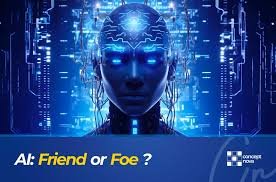
AI in the Classroom: Friend or Foe?
The Potential of AI in Education
Technology is reshaping education, and artificial intelligence (AI) is becoming a part of classrooms in ways we couldn’t have imagined just a few years ago. From grading assignments to offering personalized tutoring, AI promises to make learning more efficient and tailored to individual students. But as with any new tool, there are both benefits and challenges. In this blog, I want to share my perspective as an educator, exploring how AI can support teaching and learning while also highlighting areas where human judgment remains essential.
AI has incredible potential. Tools that automate grading, provide tutoring, and adapt lessons to individual students can save teachers time and help students learn more effectively. Luckin et al. (2016) emphasize that AI can personalize learning by analyzing student performance and adjusting instruction accordingly. In my work as a CCMR coordinator, I’ve seen how these tools allow teachers to focus more on interacting with students instead of getting bogged down in administrative tasks.
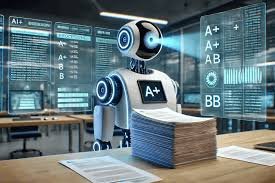
AI for Grading
Automated grading is one of the most immediate applications of AI. It can quickly evaluate multiple-choice tests, essays, and other assignments by analyzing grammar, structure, and content. Instant feedback helps students understand their mistakes and improve faster (Balfour, 2013).
Pros:
- Saves time for teachers
- Provides quick, consistent feedback
- Helps track student progress over time
Cons:
- Can miss nuances in creative or critical thinking assignments
- Lacks human understanding of context and originality
In my experience, AI grading works well as a first pass, but human review is essential to ensure fairness. AI supports teachers—it doesn’t replace them.
AI as a Tutoring Tool
AI tutoring platforms, such as Khan Academy’s AI recommendations or Carnegie Learning, provide personalized instruction. These tools identify areas where students struggle and offer targeted exercises, which is especially helpful for students exploring careers or postsecondary pathways.
Pros:
- Adapts to individual learning pace
- Provides extra practice tailored to student needs
- Supports CCMR initiatives and career readiness
Cons:
- May reduce human interaction and mentorship
- Some students may disengage without teacher encouragement
Blending AI tutoring with personal mentorship has proven effective in my classroom, combining technology with human connection.
Personalized Feedback
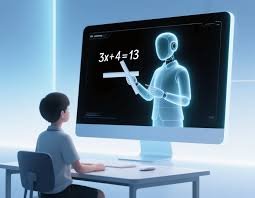
AI can give instant feedback, helping students reflect and improve their work. Writing assistants, for example, can suggest grammar improvements, sentence restructuring, and vocabulary enhancements. This is particularly helpful for students learning English or needing additional support.
Pros:
- Immediate, actionable suggestions
- Supports independent learning
- Encourages skill development in real time
Cons:
- Feedback can feel impersonal or mechanical
- Cannot replace motivational and emotional support from teachers
A balance of AI feedback and human guidance ensures students not only improve but also feel supported and encouraged.
Ethical and Practical Considerations
AI integration raises questions about privacy, access, and equity. Many AI tools collect student data, so compliance with regulations like FERPA and teaching digital safety are crucial. Additionally, students without reliable access to technology may be disadvantaged (Holmes et al., 2019).
Teacher training is also key. AI tools ae most effective when educators know how to integrate them thoughtfully, using them to enhance instruction rather than as shortcuts.
Conclusion
From my experience, AI is both a friend and a tool that requires careful handling. It saves time, provides personalized support, and can make learning more engaging. Yet, it cannot replace the human connection that motivates and guides students. In my CCMR work, AI helps track progress and suggest career pathways, while I provide mentorship, answer questions, and offer encouragement. This blended approach has been incredibly effective, showing that AI works best as a partner, not a replacement.
Is AI in the classroom a friend or foe? The answer is nuanced. AI offers efficiency, personalization, and scalability, but it lacks the empathy, mentorship, and judgment that teachers provide. When used thoughtfully, it can enhance education and help students succeed academically while preparing them for the future. The key is to embrace AI as a supportive tool while maintaining the human elements that make learning meaningful.
“Artificial intelligence is not about man versus machine—it’s about amplifying human abilities.” — Satya Nadella
References
Balfour, S. P. (2013). Assessing writing in MOOCs: Automated essay scoring and the future of writing assessment. Research & Practice in Assessment, 8(1), 40-48. https://www.rpajournal.com/assessing-writing-in-moocs
Holmes, W., Bialik, M., & Fadel, C. (2019). Artificial intelligence in education: Promises and implications for teaching and learning. Boston, MA: Center for Curriculum Redesign. https://curriculumredesign.org/ai-in-education
Luckin, R., Holmes, W., Griffiths, M., & Forcier, L. B. (2016). Intelligence unleashed: An argument for AI in education. Pearson. https://www.pearson.com/content/dam/one-dot-com/one-dot-com/global/Files/about-pearson/innovation/Intelligence-Unleashed-Publication.pdf