How an ePortfolio Supports Professional Growth
When I created My Learning Manifesto: A CCMR Coordinator’s Vision, I wanted to define what meaningful learning looks like for both students and educators. At its core, my manifesto reflects a belief that education should go beyond compliance and content. It should inspire curiosity, agency, and connection. As I continue to grow professionally, I’ve realized that maintaining an ePortfolio is one of the most effective ways to live out that vision. It gives me space to reflect on what I’m learning, document the evolution of my work, and stay intentional about how I lead and support others.
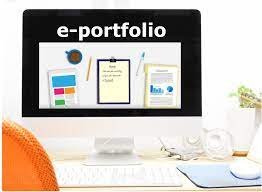
An ePortfolio isn’t just a digital binder of artifacts—it’s a tool for reflection and growth. It helps me see how my professional values take shape through action. Every project I share, every piece of feedback I reflect on, and every innovation I try becomes part of a bigger story about who I am as a learner and leader.
Research supports this idea. Roberts, Maor, and Herrington (2016) explain that ePortfolios encourage deeper learning because they link evidence of practice with personal insight. That’s exactly how I experience it. When I upload something, a new mentorship initiative or a revised CCMR plan, I’m not just posting evidence. I’m asking myself: What did this teach me? How did this change my approach? This type of ongoing reflection helps me grow more intentionally and align my actions with the core values outlined in my manifesto.
Helen Barrett (2019) also describes ePortfolios as a balance between reflection and assessment. I see that balance daily. My ePortfolio helps me demonstrate my professional progress, but it also pushes me to slow down and think deeply about the why behind my work. In that sense, it’s both mirror and map—showing where I’ve been and guiding where I want to go next.

Connecting Learning, Innovation, and Reflection
In A New Culture of Learning, Thomas and Brown (2011) remind us that real learning happens through curiosity and play, not just structure. An ePortfolio embodies that philosophy for educators. It gives me permission to experiment, share, and learn in public. I can explore new ideas about technology integration, document what works, and even reflect on what doesn’t.
As a CCMR Coordinator, much of my work involves collaboration, connecting teachers, students, and community partners. My ePortfolio helps model that same openness I want to see in classrooms. It shows that technology isn’t just a tool for efficiency; it’s a bridge for sharing ideas and building professional community.
I’ve used tools like Prezi, Canva, and AI-driven mentor-matching platforms to communicate programs and outcomes in engaging ways. Each tool has allowed me to stretch creatively and think differently about how learning experiences are presented. Trust and Pektas (2018) emphasize that digital portfolios can help educators develop new ways of thinking about technology—not just as something to use, but as something to create with. I’ve found that to be true. The process of designing my ePortfolio feels like its own form of learning design—strategic, creative, and deeply reflective.
“Learning is creation, not consumption. Knowledge is not something a learner absorbs, but something a learner creates.”
— George Couros
Helping Others Through Shared Practice
One of the most rewarding parts of having an ePortfolio is the chance to share my work with others. When I publish reflections, frameworks, or data from CCMR initiatives, I’m not just documenting my journey, I am inviting collaboration. Educators in my network can see what I’m trying, offer ideas, or adapt pieces for their own context.
This type of transparency supports a culture of shared growth. Kilbane and Milman (2017) describe ePortfolios as digital professional learning communities, where reflection and innovation can spread across networks. That description captures what I hope my ePortfolio can become—a space where my experiences contribute to the broader conversation about preparing students for life after high school.
I think back to the Digital Career Exploration and Mentorship Program I created. When I include this work in my portfolio, I’m not just showcasing a project. I’m documenting how collaboration, technology, and mentorship come together to create opportunity for students. By telling those stories, I hope to help other educators see that meaningful innovation doesn’t always require major reform—sometimes, it starts with reimagining what we already do.

Looking Ahead: Why the ePortfolio Matters Long-Term
Maintaining an ePortfolio is an ongoing commitment, but it’s one that pays off in many ways. Professionally, it helps me organize my achievements and demonstrate growth beyond what a résumé could ever show. Eynon and Gambino (2017) note that ePortfolios capture learning as development, not just as accomplishment. That’s what makes them powerful for career advancement—they tell the story behind the credentials.
For me, that story is about growth, leadership, and a continuous pursuit of better learning experiences for students. My portfolio helps me track that growth over time and stay aligned with my evolving goals as an educator and leader.
It also keeps me accountable to the same lifelong learning mindset I encourage in others. When students see that I’m documenting my own progress, reflecting on challenges, and using technology creatively, it models the kind of curiosity and resilience we want them to develop. In that sense, my ePortfolio isn’t just for me—it’s a teaching tool. It shows that professional growth never stops, and that reflection is just as important as achievement.
Final Thoughts
Building and maintaining an ePortfolio has changed how I view professional learning. It’s not just about collecting evidence—it’s about connecting experiences, ideas, and reflection into something meaningful. For me, it extends the purpose of my Learning Manifesto. It reminds me that growth is continuous, that technology can be transformative when used thoughtfully, and that sharing our learning journeys helps strengthen the entire educational community.
In many ways, my ePortfolio represents the same principles I hope to instill in students: curiosity, creativity, and connection. It’s not just a record of what I’ve done—it’s a space to keep learning, evolving, and reimagining what education can be.
“We do not learn from experience… we learn from reflecting on experience.”
— John Dewey
References
Barrett, H. (2019). Balancing the two faces of ePortfolios. Journal of Educational Technology, 29(2), 18–25.
Eynon, B., & Gambino, L. M. (2017). High-impact ePortfolio practice: A catalyst for student, faculty, and institutional learning. Stylus Publishing.
Kilbane, C. R., & Milman, N. B. (2017). The digital teaching portfolio handbook: A how-to guide for educators (2nd ed.). Pearson.
Roberts, P., Maor, D., & Herrington, J. (2016). ePortfolio-based learning environments: Recommendations for effective scaffolding of reflective thinking in higher education. Educational Technology Research and Development, 64(4), 933–956.
Thomas, D., & Brown, J. S. (2011). A new culture of learning: Cultivating the imagination for a world of constant change. CreateSpace.
Trust, T., & Pektas, E. (2018). Using digital portfolios to develop teachers’ technology integration knowledge, skills, and mindsets. Contemporary Issues in Technology and Teacher Education, 18(3), 444–460.